Earlier this year I bought a 2007 Mitsubishi Delica D:5.
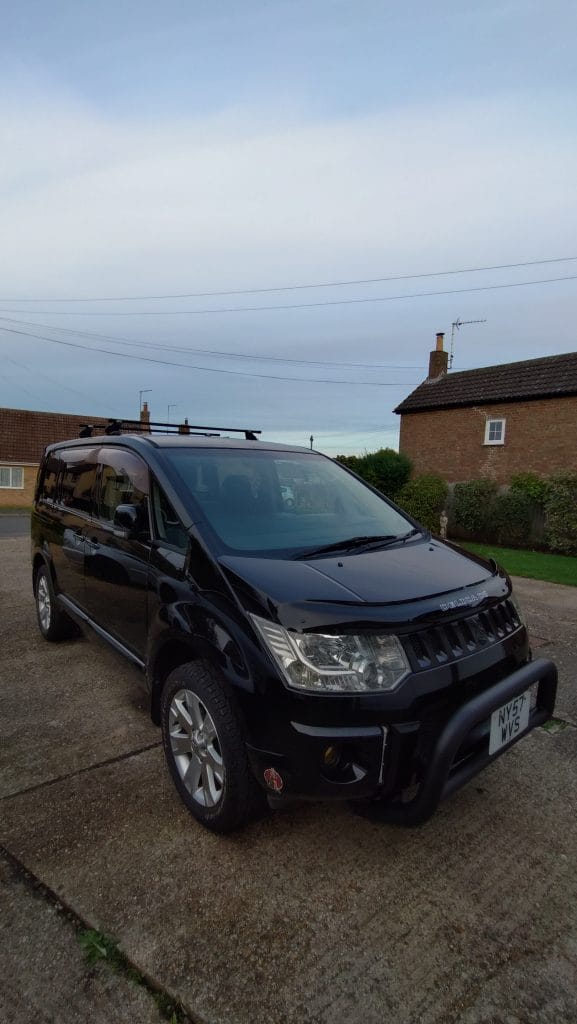
The D:5 has been sold in Japan since 2007 but was never officially sold in the UK. Mine is a Japanese import, which means that while it is perfectly legal and registered with the DVLA, getting insurance for it can be a little more complicated than a normal UK-market car.
When I first insured it I ended up using a specialist insurer. Most mainstream insurance websites either didn’t know what a Delica D:5 was or wouldn’t recognise the registration at all.
I could have just accepted that as one of the quirks of owning a grey import.
Instead, I asked AI why.
Going down the rabbit hole
I started asking ChatGPT how UK insurers actually know what car is attached to a registration number.
I assumed there must be some central database somewhere, but I’d never really thought about where the data came from or who was responsible for it.
After quite a bit of research, we ended up at Thatcham Research and its Vehicle Risk Data.
Thatcham maintains the ABI vehicle data used throughout the UK insurance industry. Vehicles are assigned an eight-digit ABI code which gives insurers and other systems a standard way of identifying a particular vehicle derivative.
That immediately gave us a possible explanation for my problem.
Maybe insurers weren’t refusing to recognise the Delica because it was an import. Maybe the vehicle simply didn’t exist in the dataset their software was using.
The next question was how to get it added.
Mitsubishi UK couldn’t help
Our first thought was that the data probably had to come from Mitsubishi.
I’d recently been speaking to a particularly helpful dealer about getting a windscreen for the Delica, so I asked whether they could escalate the insurance database issue to Mitsubishi UK.
They did.
Unfortunately, Mitsubishi UK’s answer was basically what you’d expect.
The D:5 is a grey import. Mitsubishi UK never imported it, never supplied one to Thatcham for testing and doesn’t officially support the model in the UK.
Fair enough.
At this point it would have been very easy to assume we’d reached the end of the road.
Instead, I went back to ChatGPT with Mitsubishi’s response and we started looking at the problem from the other direction.
Rather than asking Mitsubishi to add the car, could the owner ask Thatcham directly?
Asking Thatcham
I contacted Thatcham’s Vehicle Risk Data team and explained what I was trying to do.
Their response was surprisingly simple.
They already had listings for imported older-generation Mitsubishi Delicas, but no Delica D:5 listings existed at all.
More importantly, they confirmed that an ABI code request can come from:
- the vehicle manufacturer
- the importer
- the owner
The only requirement for an imported vehicle is that it must already be registered for use in the UK.
That was the breakthrough.
I didn’t need Mitsubishi Japan to send technical information to Mitsubishi UK. I didn’t need an importer to do it. I didn’t need to convince an insurance company to manually create a vehicle.
I could just submit my own car.
Adding the first D:5
Thatcham asked me for fairly basic information about the vehicle, including the registration, model, original registration date, trim, engine, transmission, number of seats and whether it was 2WD or 4WD.
Fortunately, I already knew far more about the car than anybody reasonably needs to know.
Mine is:
Mitsubishi Delica D:5
2007
2.4 petrol
CVT
4WD
8 seats
G-Premium Package / Roadest
The VIN also identifies the exact classification as LTXHZ, which corresponds to the G-Premium Package/Roadest 4WD CVT.
I sent everything over.
A few hours later I got this response:
ABI code 34195253 has been created for your vehicle.
That was it.
Something that had been making the car difficult to identify throughout the UK insurance industry was fixed with an email.
Thatcham told me that the new code would first be published on 16 October and warned that it could then take several weeks for insurers to absorb the listing into their own systems.
Did it work?
Yes!
A few days after the ABI database was updated, comparison websites started recognising my registration as a Mitsubishi Delica D:5 rather than an unknown vehicle or an Outlander.
Initially, that was as far as it went. The car was correctly identified, but neither comparison website would actually provide any insurance quotes.
That’s now changed.
Compare the Market is returning genuine insurance quotes, including Admiral at around £600 per year. That’s a perfectly reasonable price for an imported Japanese vehicle, and importantly, it’s being quoted as a Mitsubishi Delica D:5.
Admiral also recognises the registration correctly through its own website.
I’m still insured with Adrian Flux until April, so I haven’t switched insurers just yet. But when renewal comes around, I now have the option of moving the Delica onto my existing Admiral MultiCar policy.
What started as a frustrating problem with an incorrectly identified imported vehicle has turned into a proper solution. The Delica is now recognised by the UK insurance database, comparison websites can identify it, and mainstream insurers are actually willing to quote for it.
So yes, it worked. And hopefully, getting this particular Delica added to the database will make life a little easier for other owners importing the same model.
What about everyone else’s D:5?
My ABI code doesn’t suddenly cover every Delica D:5.
The D:5 has been around for nearly 20 years, and there are a ridiculous number of combinations of engines, trim levels, drivetrains and seating configurations.
Even the early CV5W alone has classifications for G, G-Power Package, G-Navi Package, G-Premium Package, M, C2, Chamonix and Roadest variants, with different 2WD, 4WD, seven-seat and eight-seat configurations.
Rather than trying to catalogue all of them myself, I posted what I’d discovered in the UK Delica Facebook groups.
Any owner with a UK-registered D:5 can contact Thatcham and provide the details of their car.
Hopefully, as more owners submit different variants, the D:5 gradually becomes properly represented in the UK insurance databases.
That should make life easier for existing owners and people importing them in the future.
This is the sort of thing I wouldn’t have done before AI
The interesting part of this isn’t really the ABI code.
It’s that without AI I probably wouldn’t have even tried to fix it.
A few years ago I would have gone to Compare the Market, discovered the car wasn’t listed and concluded:
“It’s a Japanese import. That’s just how it is.”
I might have done a few Google searches, found lots of pages about specialist import insurance and then called Adrian Flux or another specialist broker.
What I almost certainly wouldn’t have done is research the data architecture behind the UK motor insurance industry, work out who maintains the vehicle records, investigate how ABI codes are created, contact Mitsubishi, interpret their response, find the right department at Thatcham and then work through the process of getting a new vehicle derivative created.
The problem wasn’t impossible before.
All of the information technically existed.
The problem was that the amount of effort required to find and understand it wasn’t really proportionate to the problem I was trying to solve.
That’s where I’ve found AI particularly useful.
It can research the boring bits.
I could ask a question, get enough information to ask a better question, give it the response I’d received from Mitsubishi or Thatcham and then continue from there.
It also remembered the ridiculous amount of information I’d already gathered about the car, including its chassis code and Mitsubishi classification, so I didn’t have to start every conversation from scratch.
It wasn’t always right either.
Our initial assumption was that Mitsubishi would probably need to supply the vehicle data to Thatcham. Mitsubishi UK quite reasonably told us they couldn’t because they never sold the D:5 here.
So we changed direction.
That’s quite different from simply asking an AI a question and blindly copying the answer.
It became much more like having someone alongside me to investigate the problem with.
Lowering the barrier to doing slightly ridiculous things
Software has done this for years.
A problem that would once have needed a custom server can now be solved with a Lambda function. Something that would have needed a bespoke application can sometimes be solved with a spreadsheet and an API.
I think AI does something similar for research and administration.
It lowers the amount of effort required to investigate something.
That makes projects worthwhile that previously wouldn’t have been.
Getting a 19-year-old Japanese MPV added to an obscure insurance industry database is a pretty good example.
There was no financial incentive for me to spend hours learning how the UK insurance industry’s vehicle data works. I already had insurance.
I was just annoyed that the car didn’t exist when I typed the registration into a comparison website.
But because AI made the research so much quicker, the threshold for saying “I wonder if I can fix that?” became much lower.
And somehow that ended with the Mitsubishi Delica D:5 getting its first ABI listing.
ABI code 34195253.
A tiny and incredibly niche achievement.
But I’m quite pleased with it.